Project Context
The Parliament website needed to serve two very different audiences: specialist professionals (MPs, peers, staff) and the wider public engaging with democratic processes. At the same time, the intranet had to meet the needs of MPs and staff working across the UK. The goal was to increase engagement, satisfaction, and accessibility while aligning with Parliament’s strategic and cultural objectives.
Project Goals/ Timeline
5 years, with iterative phases of research, consultancy, testing, and benchmarking.
- Understand the needs of highly diverse audiences (staff, MPs, Lords, public, hard-to-reach groups).
- Improve usability, accessibility, and engagement of public and intranet sites.
- Create benchmarking frameworks to track satisfaction and performance against KPIs.
- Embed continuous UCD practices into Parliament’s digital strategy.
Methodology / Process
The first stage of this project covered:
- User Needs Research: 300+ participants, including MPs, staff, professionals, and public groups (ages 13–60+).
- Usability Testing: Public site and intranet across different audiences.
- Accessibility Audits: Tested with users with sensory, cognitive, and motor impairments.
- Comparison Benchmarking: Evaluated Parliament’s site against peer institutions.
Findings from these activites were analysed and reported back to the Parliament team along with:
- Recommendations: For a service re-development programme. Including specific new tools and services, and changes to the website.
- Success measurement, satisfaction and benchmarking: A set of activities and approaches to iteratively improve the Parliament website through evidence based methods.
Second stage work:
- Continuous Measurement: Designed satisfaction metrics and scorecards linking user insights to business KPIs.
- Stakeholder Engagement: Weekly reporting, workshops, and design critiques to manage complex governance.
Outputs / Deliverables
- Comprehensive audience segmentation and personas.
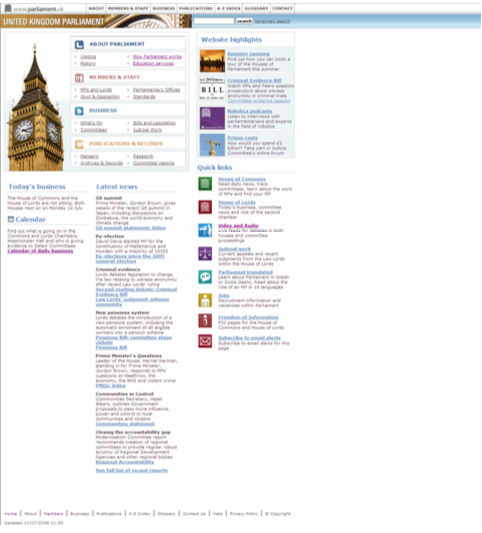
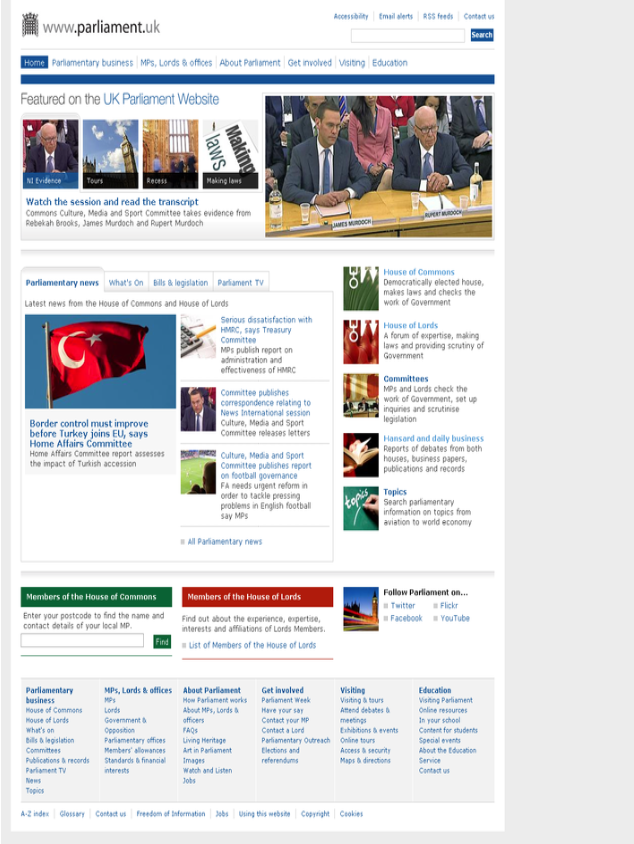
- Evidence-based redesign and IA recommendations.
- Accessibility audits and improvement plans.
- Benchmarking programme and performance scorecards.
- Consultancy to review external supplier work from a UCD perspective.
Impact
- Significant increases in user satisfaction and usability across all audience groups.
- Improved accessibility compliance for diverse users.
- Established evidence-based decision-making as part of Parliament’s development processes.
- Strengthened the quality of supplier deliverables through user-centred auditing.
Reflections
This project taught me the importance of balancing political sensitivities with evidence-based advocacy. At times, I had to challenge entrenched views while maintaining trust and collaboration. If I were to do it again, I would create more visual service design artefacts (e.g., journey maps, stakeholder maps) to bridge strategy and delivery, making it easier for non-designers to connect insights with tangible improvements.